The complete orchid care guide: How to keep orchids blooming for years
If you are new to the world of orchids, you will want to read this! I have had orchids successfully for the last 5 years. Here i will be sharing with you, my complete guide to caring for them so that they last for years.
Around 15 years ago i bought my first house plant, it was a money tree that i still have and i still love. 5 years ago i really wanted to add some orchids to my now, 25 plus houseplant situation. One weekend i had decided that i wanted a purple orchid because i was very deep into my Feng Shui practice and purple orchids are the best for welcoming abundant energy into your home.
Why Purple Orchids Are So Special in Feng Shui
Orchids have a particularly beautiful place in Feng Shui because they are traditionally associated with beauty, refinement, harmony, fertility, abundance, and good fortune. They also have an elegant upward-growing form, making them a lovely choice when you want to introduce living energy and beauty into a room.
Purple orchids are especially meaningful because purple is traditionally associated with wealth, abundance, dignity, spirituality, and prosperity in Feng Shui. A healthy purple orchid can therefore be a beautiful addition to an area of your home where you want to encourage an energy of abundance and elevated living. Beyond symbolism, there is something naturally luxurious about a blooming purple orchid—it instantly makes a room feel more intentional and cared for. As with all Feng Shui, I like to think of this as working alongside practical action: the orchid isn't magically creating wealth, but it can serve as a beautiful visual reminder of abundance, growth, and the kind of home and life you are intentionally creating.
Where Should You Put an Orchid in Your Home?
From a practical plant-care perspective, choose a bright location with indirect light and stable temperatures.
From a Feng Shui perspective, you can also consider what the orchid represents to you and where you want to bring more of that energy into your home.
A beautiful orchid can work particularly well in living rooms, entryways, bedrooms, home offices, or dining areas.
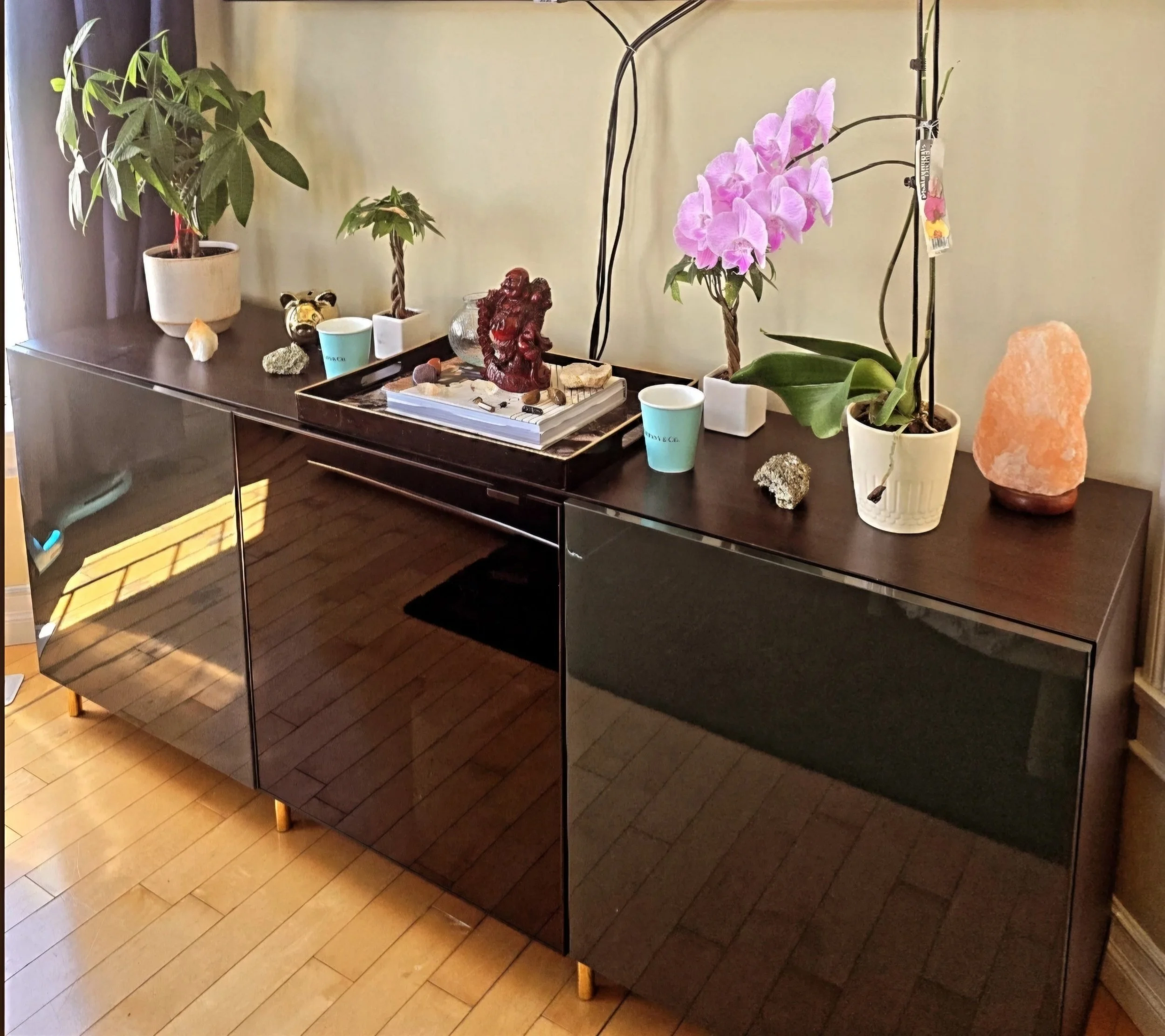
I especially love orchids in spaces where I spend time every day. Mine is in my living room, where i spend a lot of time in my day.
Just avoid placing orchids somewhere excessively dark simply because you like the decorative effect. The healthiest Feng Shui plant is ultimately a healthy, thriving plant.
The morning i decided i needed an orchid in my home i went to Costco and as i turned into the freezer isle, in the center, were around 100 purple orchids on display. It was definitely meant to be! I chose the healthiest one and bought her home.
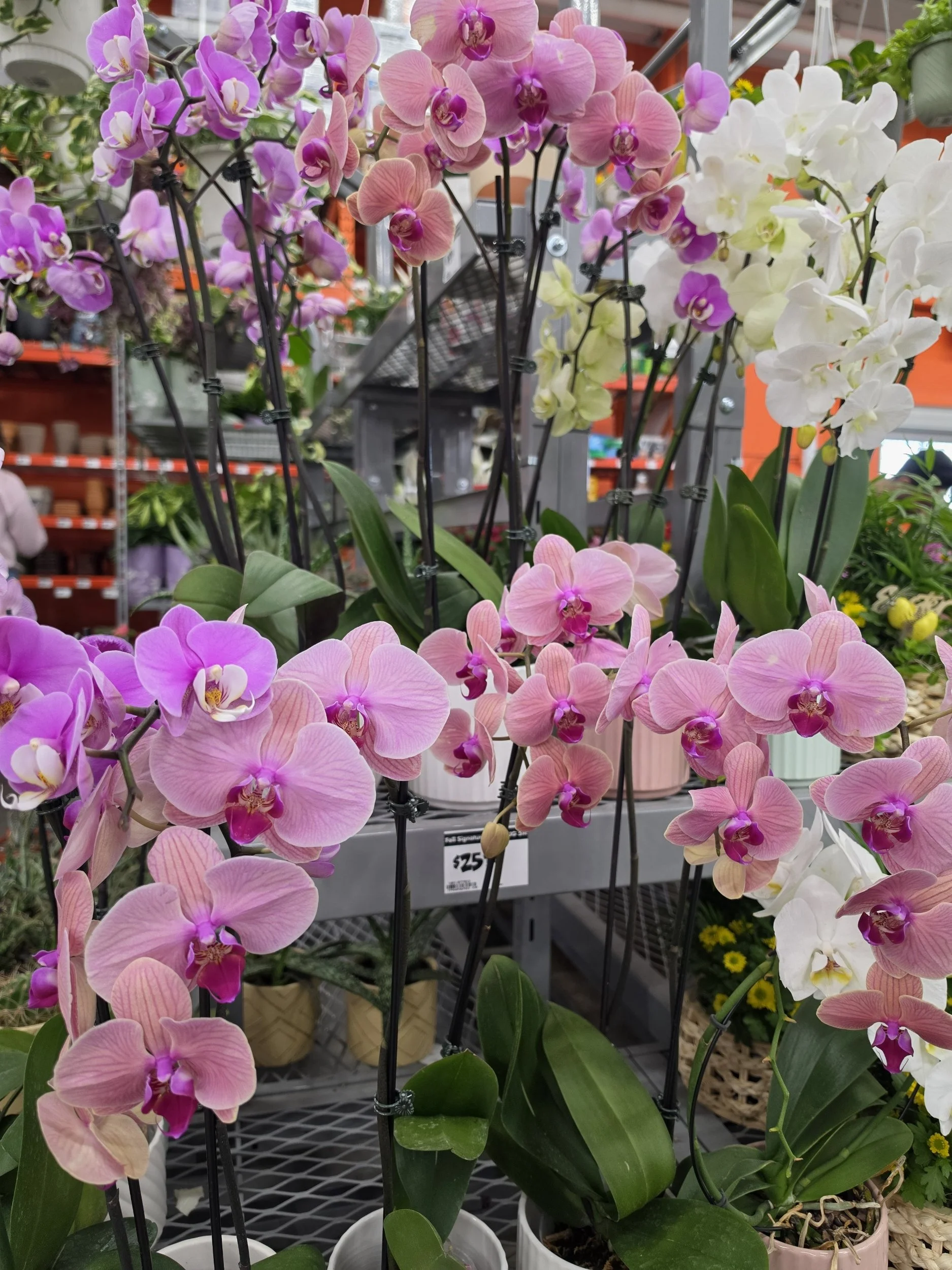
I will say that when shopping for any plant, always look for the one that is doing well. Try to avoid bringing home anything that is struggling or needs rescuing.
Orchids have a reputation for being difficult plants. I can’t even tell you how many conversations i have had with people about how hard orchids are to care for. The biggest tip i give them is to learn all the things that orchids don’t like and then don’t do them. Once you understand that, orchids actually become one of the easiest, low maintenance house plants you can have.
My brother bought his fiancé an orchid for mother’s day. Once the blooms died off, he threw the plant in the garbage not knowing that it would bloom again in time! After my blooms died off, he had come to my house and had seen my flowerless plant and was so confused at why i was keeping it around. Let’s just say it blew his mind when he found out the blooms will keep coming.
One of the reasons i love orchids so much is, i live in Canada where the flower growing season is short and i always feel sadness when the weather turns cooler and i am cutting my last blooms from the garden. Orchids however, can bloom all year round and give my home some color even when it is -30 degrees outside.
If you've brought home an orchid and aren't sure what to do with it once the beautiful flowers eventually fade, don't give up on it. With the right light, watering routine, humidity, and a little patience, your orchid can bloom again and again for years.
Here is my complete guide to orchid care, including how to water orchids, where to put them, how to encourage reblooming, when to repot, and how to keep your orchid healthy long-term.
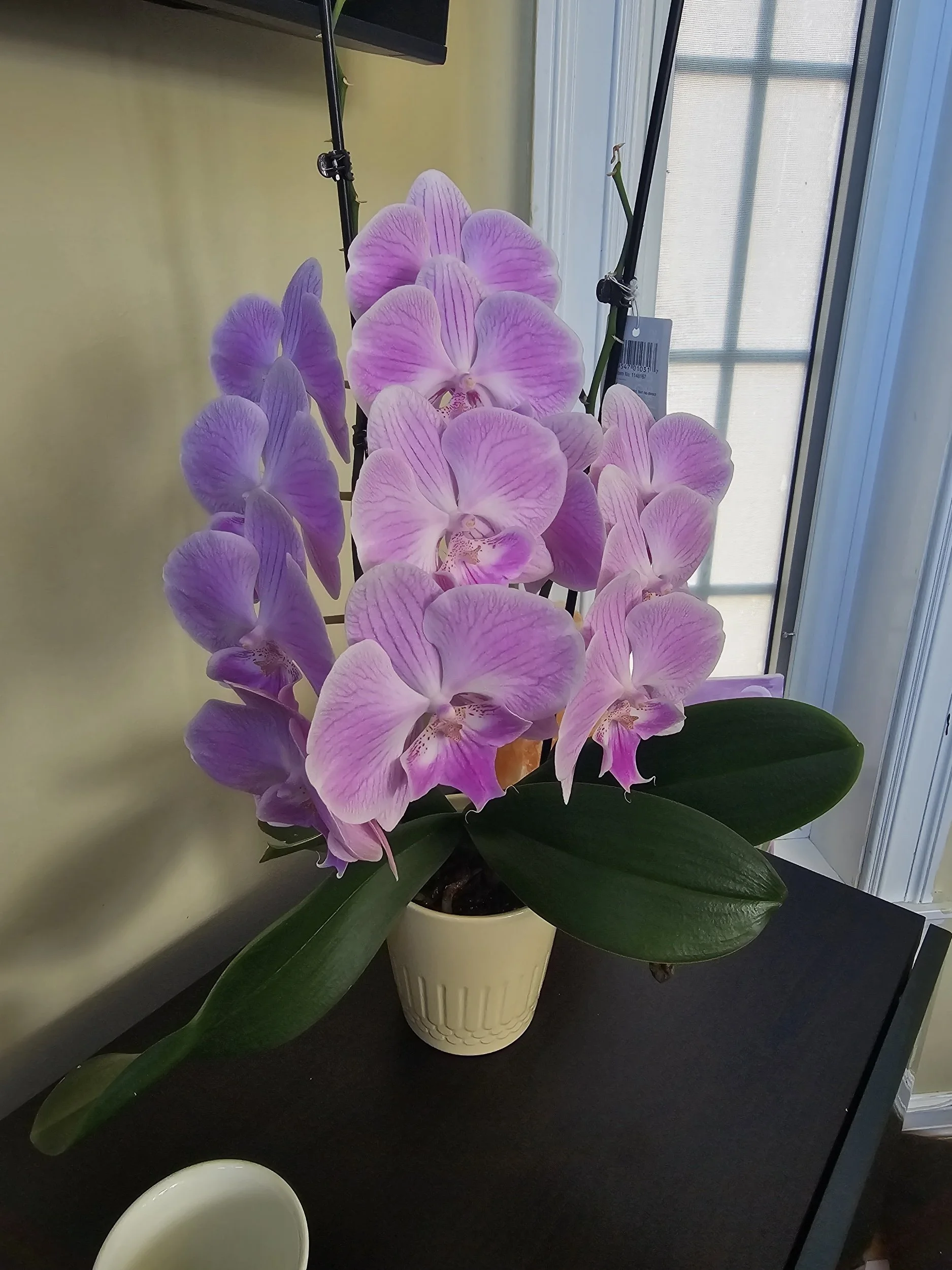
My orchid’s 7th bloom was the prettiest thing i have ever seen!
What kind of orchid do you have?
When we talk about orchids as houseplants, we're most commonly talking about Phalaenopsis orchids, also known as moth orchids.
These are the orchids you will frequently find at garden centers, grocery stores, and florists. They are particularly well suited to growing indoors because they enjoy the warm, relatively stable conditions found inside our homes.
Phalaenopsis orchids have thick, glossy leaves, long flower spikes, and beautiful blooms that can last for weeks or even months.
If you have one of these orchids, you're in luck. They are one of the easier orchids to grow as a houseplant even if you are not convinced yet!
The best light for orchids
One of the most important things you can do for an orchid is give it the right amount of light.
Orchids like bright, indirect light.
A spot near an east-facing window can be ideal because the plant receives gentle morning sunlight. A bright north-facing window can also work, while a south or west-facing window may require some protection from intense afternoon sun.
The goal is to give your orchid plenty of light without allowing the leaves to become scorched.
One of my favorite places for orchids is near a bright window where they can enjoy lots of natural light without sitting directly in harsh sunlight all day.
You can also use the leaves as a clue. Healthy orchid leaves should generally be a lovely medium green. Very dark green leaves can sometimes indicate that the plant isn't receiving enough light, while yellowing or scorched-looking leaves can indicate too much direct sunlight.
How often should you water your orchid?
This is probably the biggest question people have about orchid care.
And my answer is: don't water your orchid based solely on a schedule.
Instead, check the plant.
Orchids don't like constantly wet roots. Their roots need access to air, and allowing the potting medium to dry somewhat between waterings is important.
Depending on the temperature, humidity, potting medium, and time of year, you may find that your orchid needs water approximately every one to two weeks. But your particular plant may need more or less frequent watering.
A simple way to check is to look at the roots if your orchid is growing in a clear plastic pot. Healthy, hydrated roots are often green, while roots that are ready for watering may appear silvery or pale.
You can also feel the weight of the pot. A freshly watered orchid will feel noticeably heavier than one that has dried out.
Generally my orchid will be watered once a week in the summer and once every two weeks in the colder months.
Should you use ice cubes to water your orchid?
I have seen this a lot on social media. People will put ice cubes in their orchid pots to water them. Sometimes this works but for the long term it could hurt the plants roots.
I don't recommend making this your regular orchid-care routine.
Orchids are tropical plants, and their roots aren't designed to experience repeated exposure to very cold water. Instead, use room-temperature water and allow the excess to drain away.
What kind of soil do orchids need?
Here's an important distinction: orchids generally don't want ordinary houseplant soil.
Phalaenopsis orchids are epiphytes, meaning they naturally grow attached to trees rather than growing in traditional soil.
Their roots need air circulation.
That's why orchid potting mixes are usually made from materials such as bark, sphagnum moss, perlite, or other chunky materials designed to provide drainage and airflow.
Choosing the right orchid pot
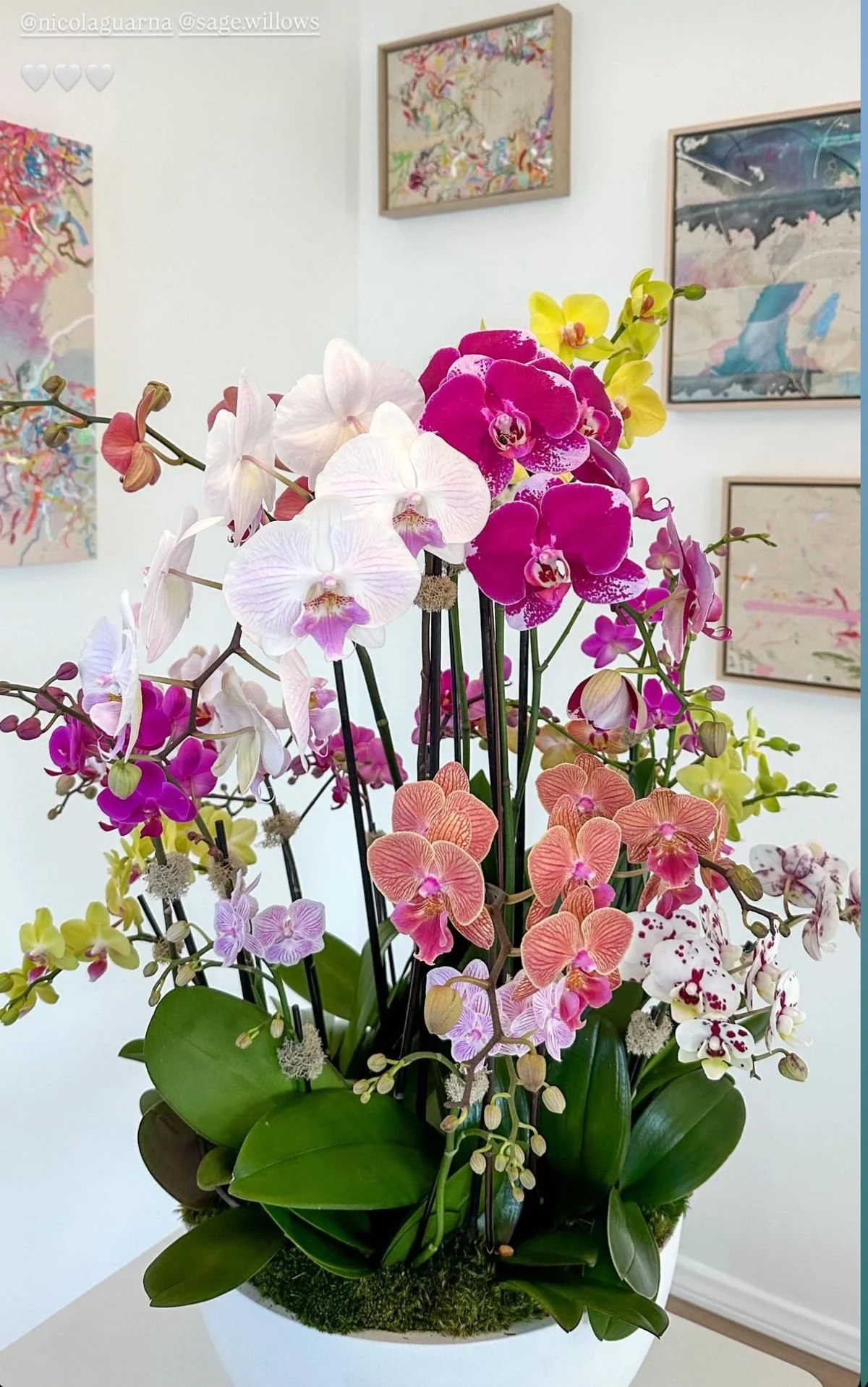
A good orchid pot should have excellent drainage.
I particularly like clear orchid pots because they make it easy to observe the roots and see when the plant may need water.
You don't necessarily have to keep your orchid in an unattractive plastic pot, though. You can place the plastic growing pot inside a beautiful decorative planter.
Just make sure that water isn't allowed to collect in the bottom of the decorative pot.
This gives you the best of both worlds: healthy roots and a beautiful plant displayed in your home.
How to repot an orchid
When it comes to repotting an orchid always look for the signs. Your plant will often show you that it is ready for a new pot.
Look at the condition of the potting medium and the roots.
If the bark has decomposed, the growing medium is compacted, the plant has outgrown its pot, or you're seeing signs of root problems, it may be time to repot.
When repotting, gently remove the old growing medium and inspect the roots. Healthy roots should feel firm. Remove roots that are dead, mushy, or badly damaged using clean, sterilized tools.
Then place the orchid into fresh orchid potting mix.
Choose a pot that is appropriately sized. Orchids don't necessarily need a huge pot—in fact, an oversized pot can hold too much moisture around the roots.
When to fertilize an orchid
Orchids benefit from regular fertilizing during periods of active growth.
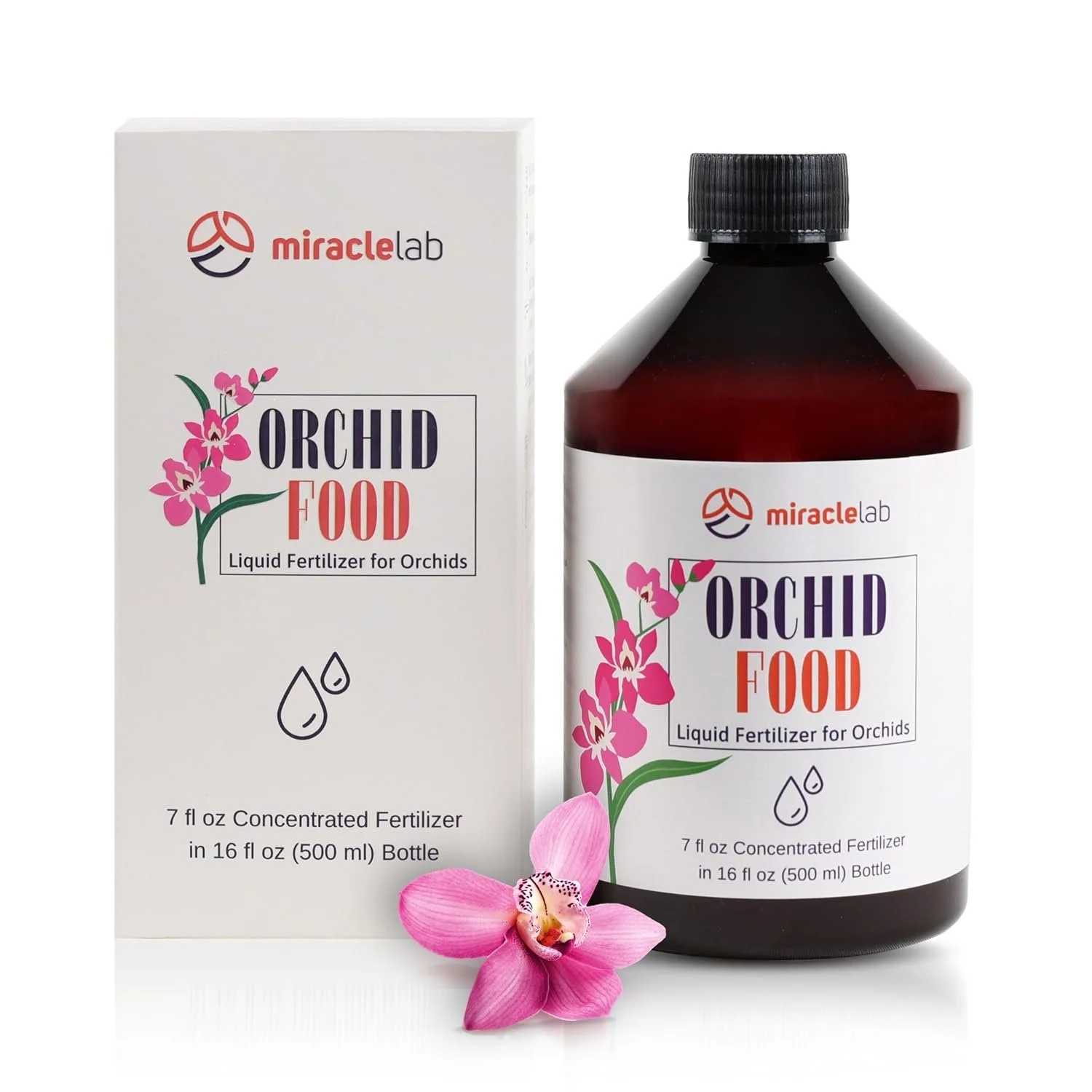
Use a fertilizer formulated specifically for orchids and follow the directions on the product rather than assuming that more fertilizer means more flowers.
Over-fertilizing can damage the roots.
A common approach is to fertilize regularly during the growing season and reduce fertilizing when the plant isn't actively growing. Always water appropriately and avoid allowing concentrated fertilizer to sit against the roots.
How to get an orchid to bloom again
This is the most exciting things about owning orchids!
Your orchid flowers will eventually fade. That doesn't mean the plant is dying.
It simply means that its current flowering period has come to an end.
Continue caring for the plant by providing appropriate light, water, humidity, and nutrition.
Once the flowers have fallen, you can decide what to do with the flower spike. If the spike is still green, some orchid growers choose to trim it above a node to encourage another flowering spike or side growth. If the spike has turned brown or dried out completely, it can generally be removed at the base.
Then comes the part that requires patience.
An orchid may spend weeks or months growing leaves and roots before producing another flower spike.
This is one reason I love orchids. They teach you not to panic when there isn't an immediate reward. Sometimes the healthiest thing your plant can do is quietly grow behind the scenes.
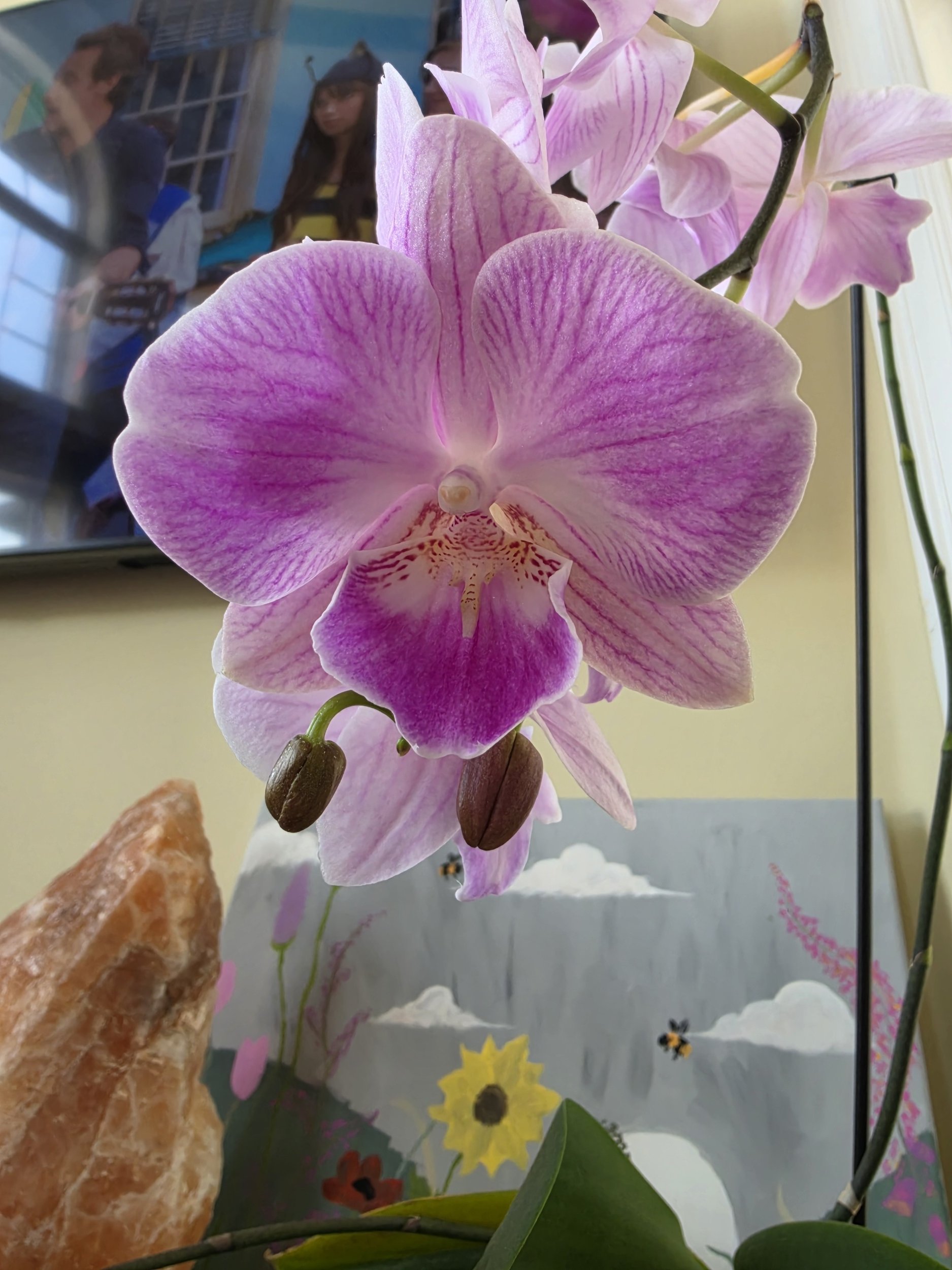
I currently have a spike dying off and a new one forming buds all at the same time!
How long do orchid flowers last?
I feel this varies based on the seasons. My summer blooms generally last longer than the winter blooms.
Under good conditions, individual flowers can remain attractive for many weeks, and an entire flowering period can last for months.
Avoid moving the orchid around constantly while it is flowering. Find a comfortable spot with appropriate light and allow it to enjoy its environment. If your orchid blooms often in one particular area of your home it means it is happy there.
Do orchids like humudity?
Yes. Orchids generally appreciate moderate to higher humidity because of the tropical environments where many originate.
Most homes, however, don't need to become a rainforest for an orchid to thrive.
If your home is particularly dry, especially during winter, you can increase humidity by grouping plants together or using a humidifier.
If you use a humidity tray, make sure the orchid pot itself isn't sitting directly in standing water.
Good air circulation is important too. Humidity without airflow can create an environment where fungal and bacterial problems become more likely.
Common orchid care mistakes
If your orchid isn't doing well, look at the basics first.
Too much water: This is one of the most common problems. Orchids generally prefer to dry somewhat between waterings.
Not enough light: An orchid may grow leaves but struggle to rebloom if it isn't receiving enough light.
Poor drainage: Always make sure excess water can escape.
Regular potting soil: Traditional potting soil can hold too much moisture and restrict airflow around orchid roots.
Too much fertilizer: More isn't better when it comes to plant food.
Ignoring the roots: Orchid roots can tell you a lot about what is happening with your plant.
Giving up after flowering: This is a big one. A finished flower display doesn't mean your orchid is finished.
Disclaimer: When purchasing on Amazon using my links, i do make a small commission at no extra cost to you. Thank you.