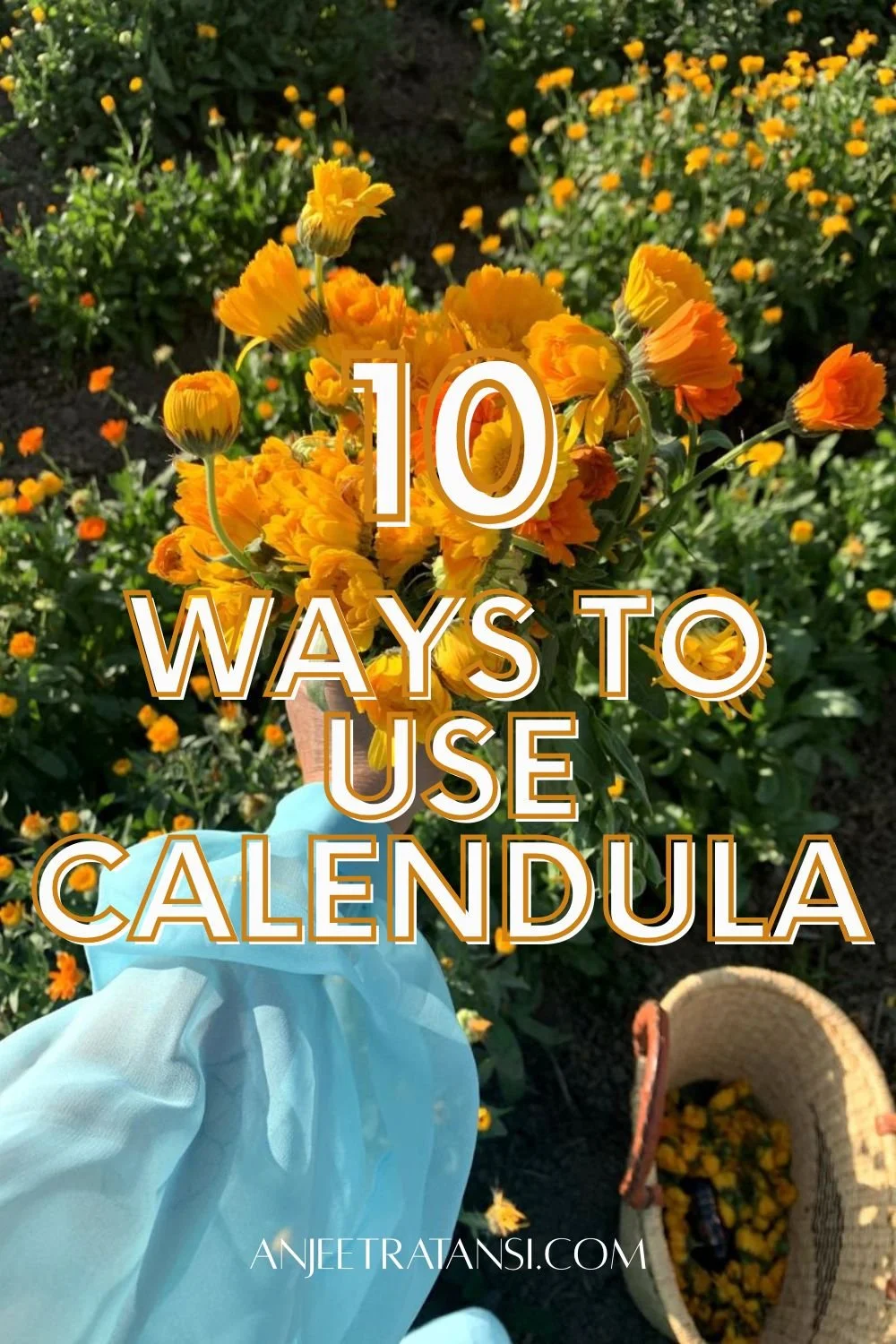
10 Ways to use Calendula flowers: From garden to home
I have an abundance of calendula flowers in my garden. If you do too, i am going to share 10 ways that you can use them in this blog post. 🧡
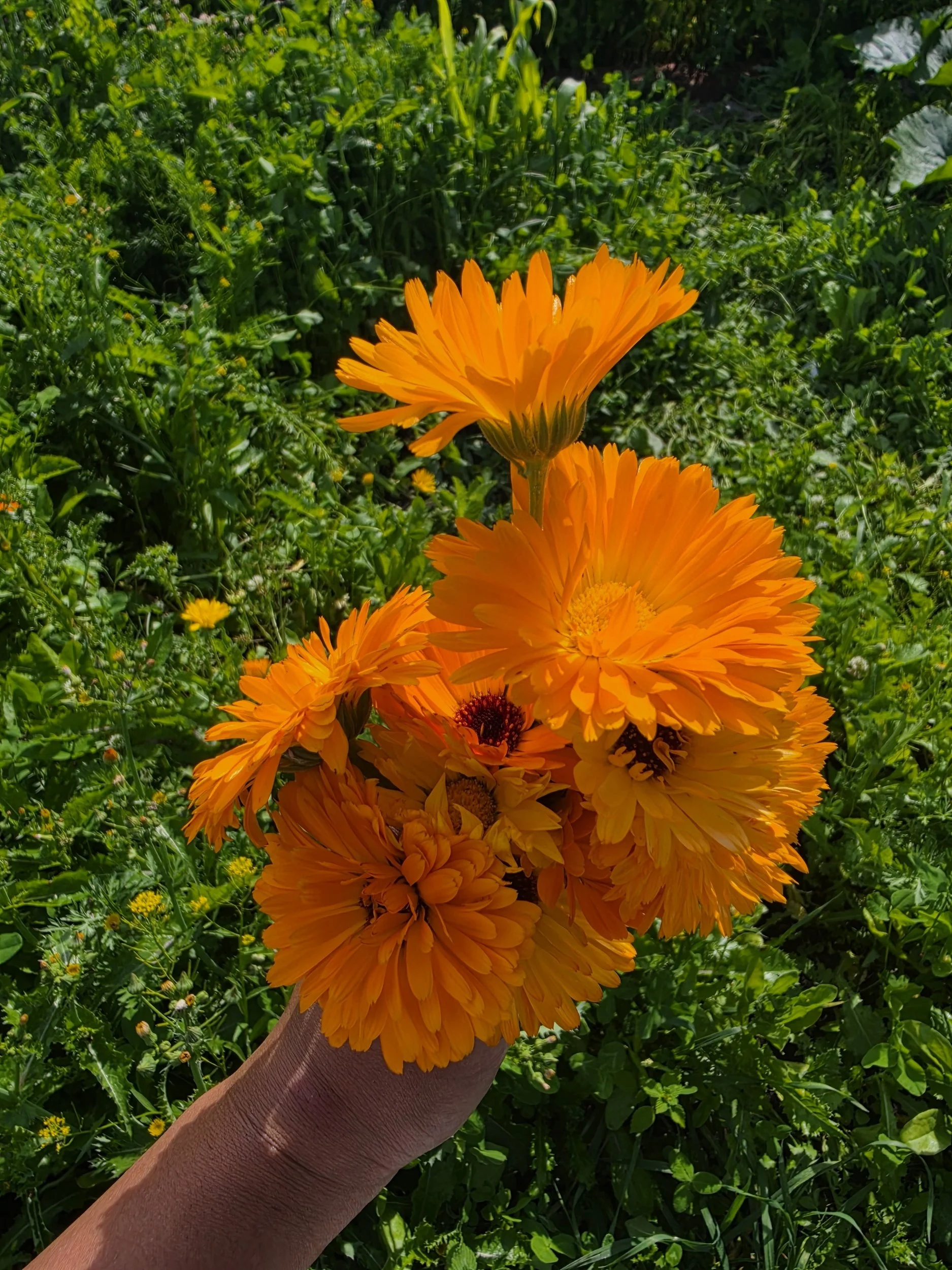
Back in May i planted a handful of calendula seeds. My garden is now filled with an abundance of these pretty yellow and orange flowers. The best part is, the more i harvest, the more that grows!
This had me thinking about all the ways that i can use calendula and then got me excited about all the things i can make!
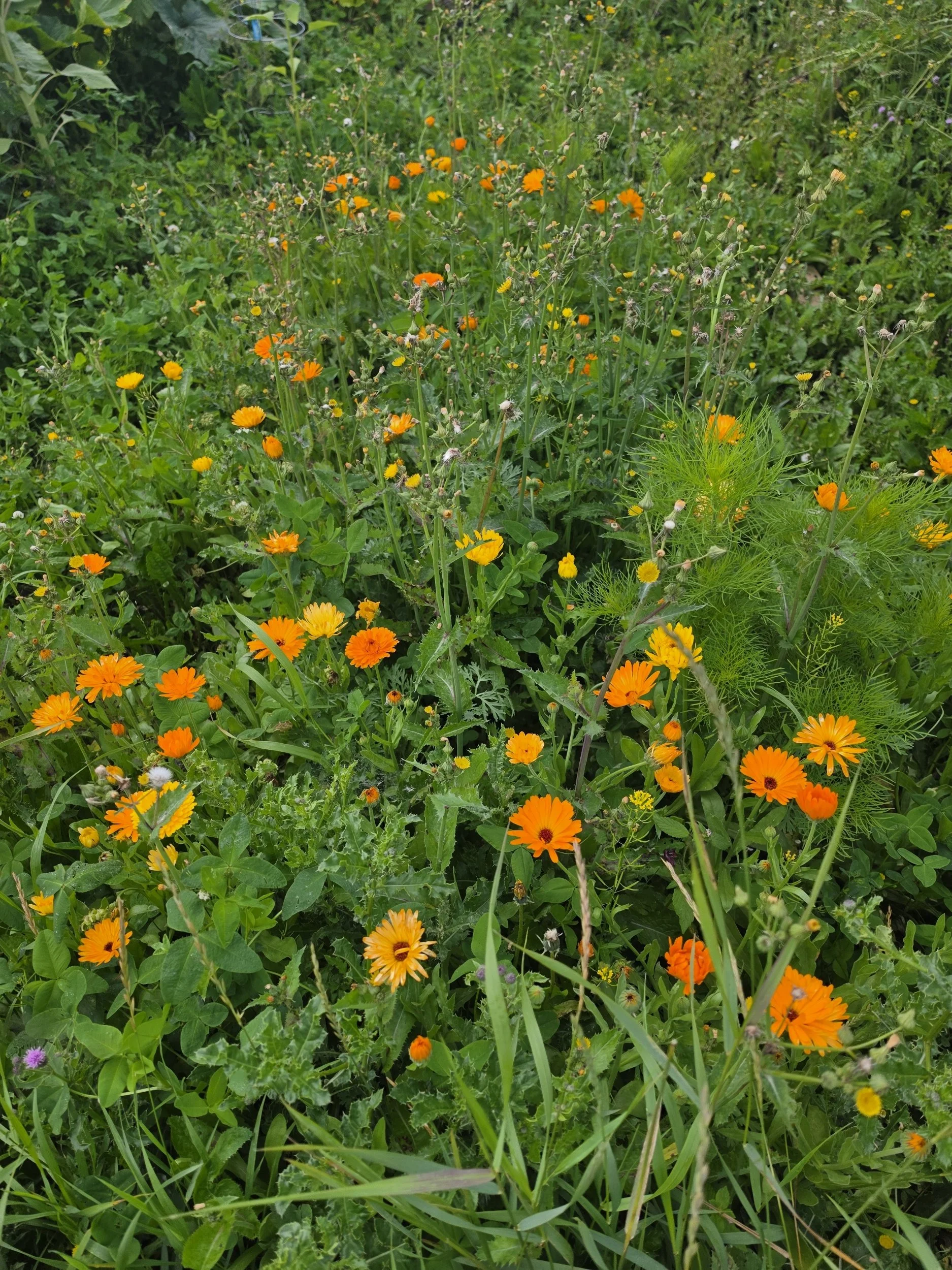
Pictured below is my little calendula patch. This summer the weather has not been great for gardening in Alberta. We haven’t had much warm weather and we have had a lot of rain. Some of the seeds i planted didn’t grow as the weeds took over but my calendula has thrived amongst the weeds. The bright colors make me feel so happy and i just love seeing it in my garden.
This was my first year growing calendula and it has been one of the easiest flowers to grow. I would say that it is very beginner friendly. I just planted the seeds and then it grew. Since we have had a lot of rain i didn’t need to water a lot this summer so my calendula has just been thriving without much effort at all.
What is Calendula?
Calendula is a cheerful flowering herb known for its bright yellow and orange blooms. Its botanical name is Calendula officinalis, and it is often called pot marigold, although it is different from the ornamental marigolds commonly grown in gardens. Calendula is native to southern Europe and the Mediterranean region and has been grown for centuries for both its beauty and practical uses. The petals are edible, and the flowers can be used fresh or dried for cooking, herbal preparations, natural skincare, bath products, and homemade salves. It is also a wonderful garden flower because its long-lasting blooms add beautiful color while attracting pollinators and beneficial insects.
If you are thinking of growing calendula, or you grew some this year and are not sure what to do with it, here are my tops 10 uses.
Calendula infused oils
At this moment, i have jars of dried calendula infused with olive oil and vitamin E sitting in my pantry. It is one of the easiest ways to use calendula.
Calendula petals can be infused into a gentle carrier oil such as olive, jojoba, or sweet almond oil. The resulting oil can be used as an ingredient in homemade skincare products.
To make it, harvest calendula flowers and allow them to dry completely. Place the dried petals in a clean glass jar and cover them with your chosen oil. Let the mixture infuse for several weeks in a cool, dark place, shaking the jar occasionally.
Strain the flowers from the oil and store the finished oil in a clean, dark container.
You can then use your calendula oil as the base for homemade:
Body oils
Lip balms
Hand creams
Body butter
Salves
Cuticle oils
Important: Make sure the flowers are completely dry before infusing them in oil. Fresh plant material contains water, which can encourage spoilage.
Calendula salve
Calendula salve is probably one of the most classic ways to use this flower.
Once you've made calendula-infused oil, you can combine it with beeswax to create a simple solid balm.
A homemade calendula salve can be lovely to keep beside the kitchen sink for dry hands, rough elbows, dry cuticles, and other areas of everyday dry skin.
You don't need a complicated recipe. A basic salve is simply an infused oil combined with beeswax and allowed to cool and solidify. It really is so easy to make.
It's also a wonderful homemade gift for friends who enjoy natural skincare. I am making a whole batch to pour into pretty tins to give as Christmas gifts this year. Homemade gifts are the best!
Add calendula petals to your cooking
Did you know that calendula flowers are edible?
The petals can be removed from the flower head and added to food for a beautiful splash of golden color.
Try sprinkling fresh petals over:
Green salads
Soups
Rice
Pasta
Homemade bread
Butter
Cakes and muffins
Calendula has a slightly peppery, mildly bitter flavor, so you don't need much.
It can also add beautiful color to dishes, which is one reason calendula has historically been nicknamed "poor man's saffron."
When using calendula in cooking, make sure you've grown it without pesticides or other chemicals that aren't intended for edible plants.
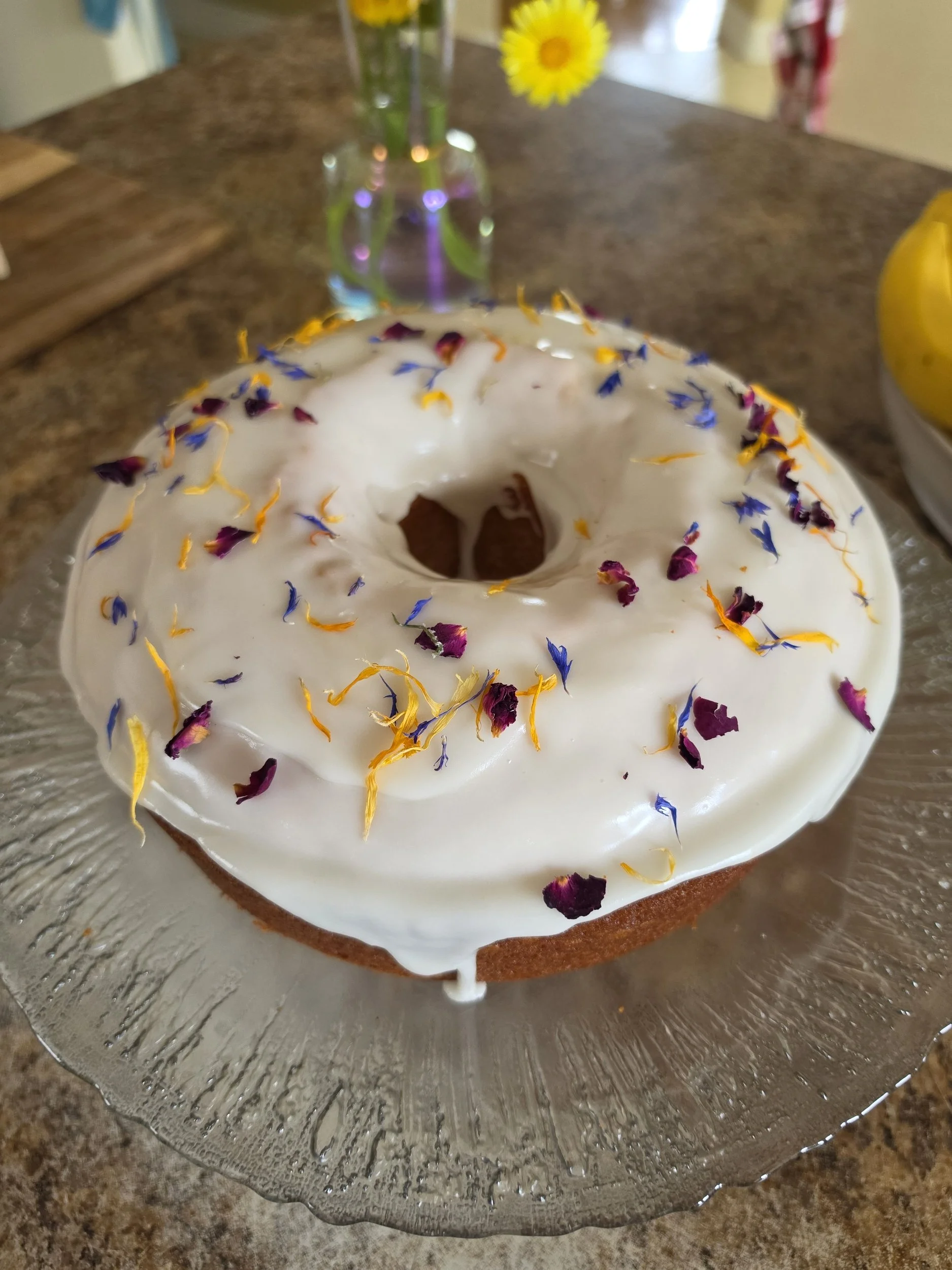
I also use dried calendula petals as natural sprinkles for cakes. Last week i made a beautiful lemon and vanilla bundt cake and sprinkled some dry flower petals on top. I love flower sprinkles! It is such a good way to preserve your summer flowers and make them last into the winter.
I also dry rose and violet petals along with the calendula for a pretty sprinkle mix. Pictured below is my cake!
Calendula tea
Dried calendula petals can also be used to make a simple herbal tea.
To make calendula tea, place dried petals in a teapot or mug, cover with hot water, and allow them to steep before straining.
Calendula tea has traditionally been used as a soothing herbal drink and is sometimes enjoyed for digestive or throat comfort.
I love the idea of keeping a small jar of dried calendula in the pantry alongside other herbs. It makes your garden feel like it is continuing to give long after summer is over.
As with any herbal preparation, calendula isn't a substitute for medical treatment, and anyone who is pregnant, breastfeeding, taking medication, or managing a medical condition should check with a healthcare professional before using it medicinally.
Homemade bath products
If you love making your own bath products, calendula is a beautiful ingredient to experiment with. Another great gift idea, i am feeling so inspired to make a blog post about handmade gifts for the holidays!
Dried calendula petals can be added to:
Bath salts and bath bombs
Herbal bath soaks
Homemade soap
Bath tea bags
You can also combine calendula with other dried flowers and herbs for a pretty botanical bath blend. Calendula and rose petals looks beautiful together.
A little muslin bag filled with calendula, lavender, and oats makes a simple, old-fashioned bath soak that feels wonderfully luxurious. I tried this to help soothe my daughters eczema and it worked so well.
Face and body oils
Calendula-infused oil can also become part of a simple natural beauty routine. Homemade skincare is my favorite!
You can apply a small amount of an appropriate calendula-infused carrier oil to dry areas of the body or incorporate it into homemade body products.
For facial use, be a little more cautious. Everyone's skin reacts differently to botanical ingredients, so patch testing is a good idea before applying a homemade product to your face.
I particularly love the idea of using calendula as part of a slow beauty routine—growing something in the garden and eventually turning it into something you use on your skin. Nothing makes my heart happier.
Dry calendula for your pantry
Don't let the end of summer mean the end of your calendula!
Calendula flowers are easy to dry, which means you can preserve some of your harvest for use throughout the year.
Harvest flowers on a dry day once the morning dew has disappeared. Remove any damaged petals and spread the flowers in a single layer somewhere warm, dry, and well ventilated.
Once completely dry, store them in an airtight glass jar away from direct sunlight.
Label the jar with the flower and date.
Having a little collection of dried herbs and flowers in your pantry is one of those simple homemaking habits that makes you feel wonderfully prepared. Make the flower sprinkles, it will make you so happy!
Homemade gifts
Homemade gifts are my favorite things to give. Anyone can buy gifts but, homemade gifts are much more meaningful.
If you're someone who loves making thoughtful homemade gifts too, calendula gives you plenty of possibilities.
You could make:
Calendula salve
Calendula-infused body oil
Homemade calendula soap
Herbal bath soaks
Dried calendula tea blends
Botanical gift baskets
Place your finished product in a pretty glass jar and add a simple handwritten label. I love being able to say “i grew those flowers in the summer.”
Calendula as home decor
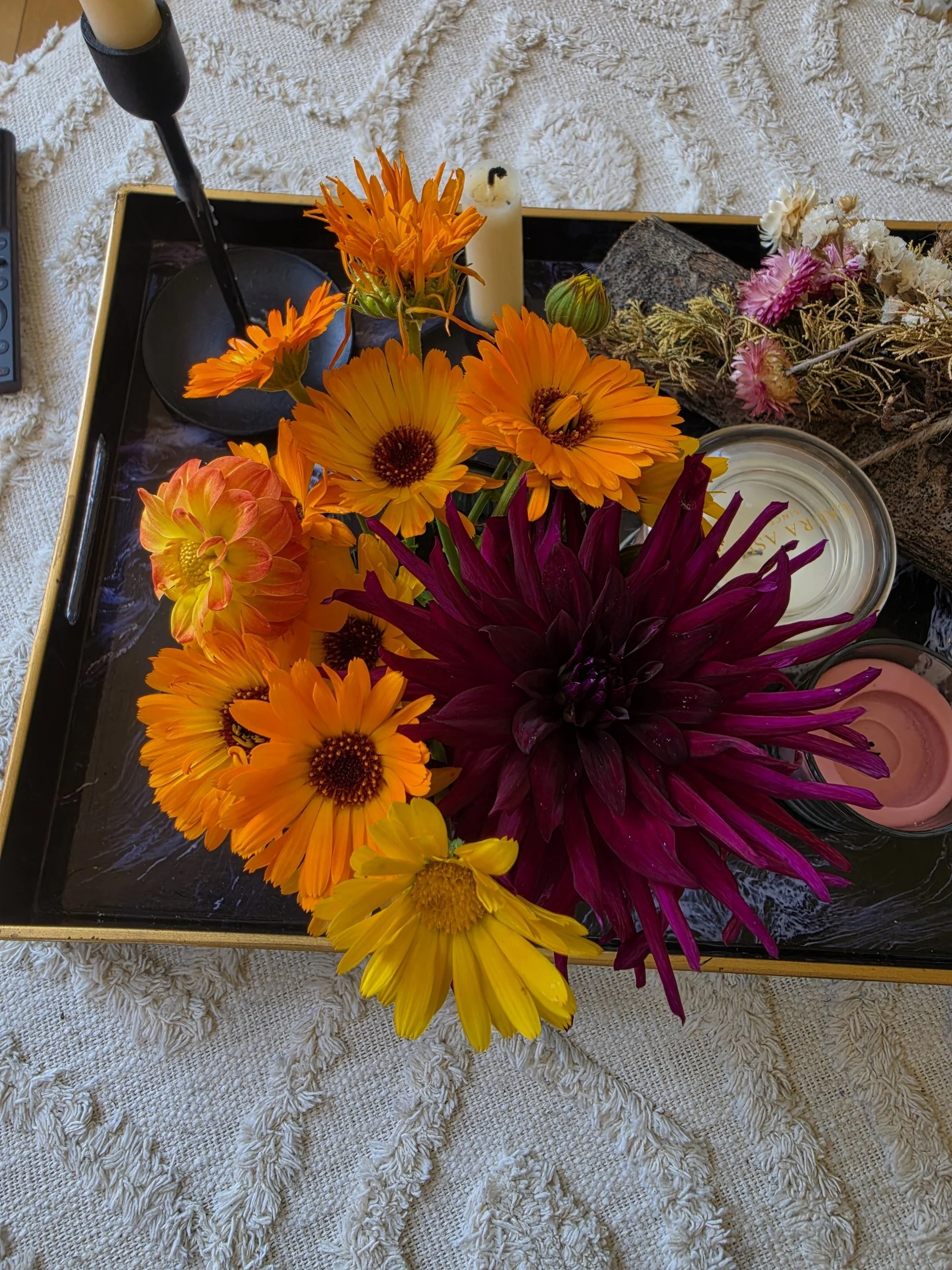
I currently have vases of calendula and other flowers i grown on my coffee table, dining table, and kitchen island.
Fresh calendula can be placed in small bud vases around the kitchen, dining room, or bedroom. You can also dry the flowers and use them in dried arrangements.
Try combining calendula with:
Lavender
Yarrow
Chamomile
Strawflowers
Grasses
Dried hydrangeas
The warm golden color works beautifully with natural, relaxed interiors.
And because calendula flowers are so cheerful, even a tiny vase of them on the kitchen counter can make the room feel brighter.
Grow calendula
Finally, one of the best uses for calendula is simply growing it.
Calendula is a wonderful addition to a home garden because it provides bright flowers that attract pollinators and beneficial insects.
It's also a relatively easy flower for beginner gardeners.
Instead of thinking of your garden as simply a place where you grow vegetables or flowers, you can start thinking of it as a living pantry and natural apothecary.
A few calendula plants can provide flowers for your table, petals for your kitchen, ingredients for homemade skincare, and color for your garden.
That's a pretty good return on a little patch of soil.
How to harvest calendula
If you want to use calendula for cooking, tea, or skincare, harvesting properly is important.
Pick flowers on a dry morning after the dew has evaporated. Choose healthy, fully opened flowers without signs of mold, disease, or insect damage.
Use clean scissors or garden snips to cut the flower heads.
For fresh use, use the petals relatively soon after harvesting.
For drying, spread the flowers out in a single layer and allow them to dry completely before storing them.
If you're planning to consume the flowers or use them in skincare, make sure you know exactly what variety you're growing and that it hasn't been treated with pesticides or other products that make it unsuitable for those uses.
Frequently Asked Questions About Calendula
Can you eat calendula flowers?
Yes. Calendula petals are edible and can be used in salads, soups, rice dishes, baked goods, and other foods. Make sure the flowers are grown specifically for edible use and have not been treated with unsuitable pesticides or chemicals.
What is calendula commonly used for?
Calendula is commonly used in traditional herbal preparations and natural skincare. It is particularly popular in creams, oils, balms, and salves intended to soothe dry or irritated skin.
Can you make calendula oil at home?
Yes. Dried calendula flowers can be infused in a carrier oil such as olive or jojoba oil. The finished infused oil can be used as an ingredient in homemade skincare products.
How do you preserve calendula flowers?
Calendula can be preserved by drying the flowers completely and storing them in an airtight container in a cool, dark place.
Does calendula come back every year?
Calendula is generally grown as an annual, although it can readily reseed itself. If you allow some flowers to mature and drop their seeds, you may find new calendula plants appearing in your garden the following year.
I would love to know what you thought about this blog post!