How to winterize your garden: A practical guide to preparing for winter
It is that time to put your garden to rest for the winter. If you are not sure how to do that, here is my guide to winterize your garden and how to prepare for spring.

This is the saddest part of the year for me as a gardener.
Part of me is excited for baking season and part of me, at this time of year, is sad for the end of gardening season. I am grateful for the rest and a great harvest season, but i am already excited and planning for spring. I am actually headed to my garden plot at the farm to put it to sleep and tidy up ready for next season.
There is something bittersweet about the end of the gardening season. After months of planting seeds, tending to flowers, harvesting vegetables and spending as much time outdoors as possible, it can be difficult to accept that the garden is coming to a rest for another year.
I always think of autumn as a time to slow down a little, enjoy what is left of the season and start preparing the home and garden for the colder months ahead. There is still so much to do, even when the flowers have finished blooming and the vegetable beds are looking a little tired.
Winterizing your garden is one of those jobs that is easy to put off until the weather turns, but a little preparation now can make such a difference when spring arrives. It helps protect your plants, look after your soil, prevent damage to garden tools and equipment, and give you a head start on the next growing season.
If you have a greenhouse, there are a few extra things to think about, particularly if you live somewhere with long, cold winters.
In this guide, I am sharing how to winterize your garden and greenhouse, from clearing the beds and protecting perennials to preparing pots, storing tools and making sure your greenhouse is ready for the months ahead.
Why Is It Important to Winterize Your Garden?
Preparing your garden for winter is about more than simply tidying everything away. It is an opportunity to protect what you have grown, improve the condition of your soil and make life a little easier for yourself when the gardening season begins again.
A few hours spent outside in autumn can help you:
Protect perennial flowers, shrubs and young plants from winter damage.
Remove diseased plant material before it becomes a problem next year.
Improve your garden soil with compost and organic matter.
Prevent frost damage to pots, hoses and irrigation equipment.
Prepare your greenhouse for winter temperatures.
Make a list of seeds, plants and supplies you want to buy for spring.
I also like to think of it as giving the garden a little attention before we spend more time indoors. There is something satisfying about putting everything in order and knowing that, even though there may be snow on the ground for months, you have done what you can to help the garden thrive again.
Clear Out Your Vegetable Garden
One of the first things I would do when winterizing the garden is go through the vegetable beds and remove any plants that have finished producing.
By this point in the season, tomatoes, beans, squash and other summer crops may have reached the end of their growing cycle. Removing old plants helps clear the space and gives you a chance to check the condition of the soil before winter sets in.
Pull out spent annual vegetables, remove weeds and collect any fallen fruit or vegetables that could attract pests.
If a plant has shown signs of disease, such as blight or persistent fungal problems, avoid adding it to a home compost pile unless you know your composting system can safely handle it. It is better to dispose of diseased material appropriately than risk carrying the problem into next year's garden.
Healthy plant material can often be composted, provided it is suitable for your composting system.
I would also remove any plant supports, tomato cages and stakes that will not be needed over winter. Give them a clean, allow them to dry and store them somewhere sheltered.
A little tip: Before clearing everything, take a few photographs of your vegetable garden. It is surprisingly easy to forget where everything was planted by the following spring, and those photographs can be helpful when planning next year's layout.
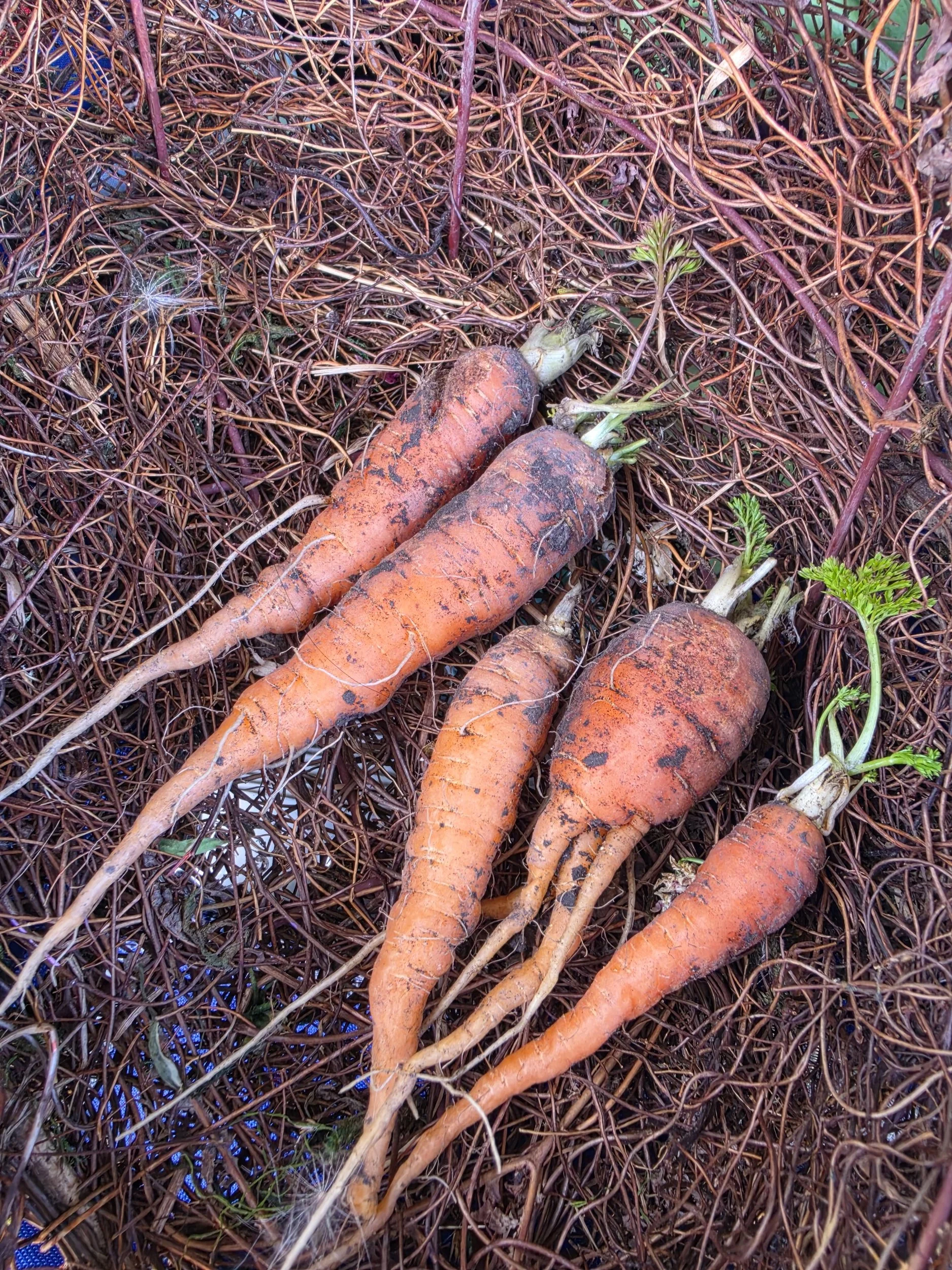
My favorite part of doing this is sometimes i find surprise carrots and other root vegetables in the ground!
Prepare Your Garden Beds for Winter
Once the vegetable beds have been cleared, it is time to think about the soil.
Healthy soil is the foundation of a good garden, and autumn is a useful time to start preparing it for the next growing season.
If you have finished harvesting and the soil is still workable, spread a layer of finished compost over your beds. You can leave it on the surface for the winter rather than digging it deeply into the soil. Rain, snow, soil organisms and natural freeze-thaw cycles will help incorporate organic matter over time.
I prefer the idea of working with the soil rather than disturbing it unnecessarily. You do not need to turn over every bed or make everything look perfectly neat before winter.
You can also protect bare soil with a layer of organic mulch, such as shredded leaves, clean straw or suitable garden compost. This helps reduce erosion and protects the soil surface from the elements.
If you have raised beds, check the frames for loose screws, damaged boards or other repairs that might be easier to deal with before the snow arrives.
And if you have been thinking about expanding your vegetable garden next year, autumn can be a good time to prepare a new bed. Covering the area with overlapping cardboard and a layer of mulch can help suppress weeds while the materials begin to break down.
The aim is to give yourself healthier, more manageable beds to work with when spring finally comes around.
Protect Your Perennials, Roses and Shrubs
Not everything in the garden needs to be cut back or cleared away before winter. In fact, some plants are better left standing until spring.
Perennial flowers, roses and shrubs all have different winter requirements, so it is worth checking what each plant needs rather than treating everything the same way.
Mulch around vulnerable plants
Once plants have started to go dormant and the soil has cooled, apply a suitable layer of mulch around plants that would benefit from extra protection.
This is particularly helpful for newly planted perennials and plants that are less tolerant of your local winter conditions.
Mulch helps insulate the soil and can reduce the effects of repeated freezing and thawing. Keep it away from the crowns of plants and avoid piling it directly against woody stems or trunks.
Be careful with roses
Roses can need extra attention in colder climates, particularly varieties that are less winter-hardy or have been planted recently.
Check the recommended winter protection for your particular rose variety and growing zone. Depending on the plant and climate, this might include additional mulch around the base or a suitable protective structure.
Avoid assuming that every rose needs the same treatment. Some hardy varieties are much better equipped to cope with winter than others.
Do not cut back everything
I know it can be tempting to cut every perennial down to the ground to make the garden look tidy, but I would resist the urge to do this everywhere.
Some flower stems and seed heads provide food and shelter for birds and beneficial insects during winter. Leaving healthy stems in place can also add structure and interest to the garden when everything else is dormant.
Remove diseased foliage and anything that could cause problems, but allow suitable healthy plants to remain until spring.
Protect young trees and shrubs
Newly planted trees and shrubs can be more vulnerable during their first winters while their roots are becoming established.
Check whether your particular plants need extra protection from cold winds, sunscald or animals such as rabbits and voles. Tree guards or appropriate trunk protection may be useful in areas where wildlife damage is common.
It is much easier to put protection in place before the ground freezes and snow makes everything more difficult.
Bring Tender Plants Indoors
If you have grown plants in pots over summer, now is the time to decide which ones you want to keep for next year.
Some plants will happily survive outdoors in your growing zone, while others will need to be brought inside before the first hard frost.
Tender herbs, tropical plants and certain flowering plants can sometimes be overwintered indoors, depending on their individual needs.
Before bringing them inside, check the leaves and stems carefully for pests. Remove dead foliage and give the pots a clean if needed. You do not want to bring unwanted insects into your home along with your favourite plants.
Choose a suitable location based on the plant. Some will need a bright window and regular attention, while others benefit from a cooler period of dormancy.
If you are hoping to save plants such as geraniums, fuchsias or tender herbs, look up the best overwintering method for the specific variety. Some can be kept as living plants, while others may be better stored dormant or propagated from cuttings.
I think this is one of the lovely things about gardening: you can often find ways to carry a little of the summer garden into the next season, rather than starting completely from scratch every year.

Protect Your Pots and Containers
This is an easy job to overlook, especially if you have pots scattered around the patio, greenhouse, back door and garden beds.
Unfortunately, freezing temperatures can cause moisture inside certain containers to expand, leading to cracks and damage. I learned this the hard way in the early years of me garden journey. I had bought the most beautiful pots for my peonies and left them out all winter only to find them all cracked in the spring!
Go around the garden and decide which pots can remain outside and which need to be emptied or stored somewhere sheltered.
Terracotta, ceramic and other porous containers are particularly worth protecting in climates with repeated freezing temperatures. If possible, empty them, clean them and store them somewhere dry and frost-free.
For plastic pots that you plan to reuse, remove old roots and debris, wash them if necessary and allow them to dry before stacking them away.
If you have hardy perennials growing in containers, remember that their roots are generally more exposed to cold than plants growing in the ground. A plant that survives winter in a garden bed may struggle in a pot when temperatures drop significantly.
Depending on the plant and your climate, you may be able to move the container to a sheltered location, protect it with insulation or heel the pot into the ground before the soil freezes.
Do not assume that moving a pot into an unheated greenhouse will automatically protect it from extreme cold. The temperature inside can drop close to the outdoor temperature unless the greenhouse has suitable insulation or heating.
Winterize Your Garden Tools and Equipment
I like the idea of putting garden tools away clean and ready for the next season. It is one of those small jobs that saves time and frustration when you are eager to get outside again in spring. Plus, it just makes me feel so accomplished!
Start by gathering your tools from around the garden, shed and greenhouse.
Remove soil and plant debris from spades, forks, trowels and hand tools.
Dry metal surfaces thoroughly to help prevent rust.
Clean and sharpen pruning tools where appropriate.
Check wooden handles for splinters or damage.
Store tools somewhere dry and sheltered.
Clean pots, seed trays and plant supports before storing them.
If you use a lawn mower, hedge trimmer or other powered garden equipment, follow the manufacturer's instructions for seasonal storage and maintenance.
Do not forget your garden gloves, twine, labels and seed-starting supplies. A quick inventory now will help you work out what needs replacing before the spring rush.
Drain garden hoses and outdoor water systems
This is particularly important if you experience freezing temperatures like me!
Disconnect garden hoses, drain the water out and store them somewhere sheltered. Drain and prepare irrigation systems according to the manufacturer's instructions, and make sure outdoor taps are winterized appropriately for your home's plumbing.
Water left in hoses, pipes and fittings can freeze and cause damage.
If you have a more complex irrigation system, follow the recommended winterization procedure rather than assuming that simply turning the water off is enough.
How to Winterize Your Greenhouse
If you have a greenhouse, autumn is the perfect time to give it a proper clean and check that everything is ready for winter.
Even if you are not planning to grow much during the colder months, looking after the structure now can help protect it from the elements and make it a much more pleasant place to work when spring arrives.
Clean the greenhouse thoroughly
Start by removing spent plants, fallen leaves, empty pots and anything else that has accumulated over the growing season.
Clean benches, shelves, seed trays and pots to remove soil and plant debris. Use a greenhouse-appropriate cleaning product and follow its instructions, particularly if you intend to keep plants inside during winter.
Clean the glazing according to the manufacturer's recommendations so that as much natural light as possible can enter.
Pay attention to corners and areas around benches where pests and plant debris may collect.
Check for damage and gaps
Inspect the greenhouse structure carefully.
Look for loose panels, cracked glazing, damaged seals, gaps around doors and vents, and any fittings that need tightening. Repair problems before winter weather makes them more difficult to deal with.
If your greenhouse has automatic vents or window openers, check that they are working correctly.
Ventilation still matters during winter. On sunny days, a greenhouse can warm up considerably even when it is freezing outside, and excess humidity can contribute to plant problems.
Insulate your greenhouse if needed
If you plan to keep plants in your greenhouse over winter, consider whether extra insulation would help.
Greenhouse insulation film or horticultural bubble insulation can help reduce heat loss, particularly overnight. Make sure any insulation is suitable for greenhouse use and does not interfere with ventilation or the structure.
You can also use water-filled containers as a form of passive heat storage. Water absorbs heat during sunny periods and releases some of it as temperatures fall. This can help moderate temperature swings, although it will not keep a greenhouse warm enough for tender plants during severe cold on its own.
If you intend to use a heater, choose equipment specifically designed for greenhouse use and follow all safety instructions. Consider a minimum-maximum thermometer or a temperature monitor so that you can see how cold the greenhouse becomes overnight.
One important thing to remember: An unheated greenhouse is not frost-proof. In a very cold climate, the temperature inside can still fall well below freezing. Insulation can help, but it cannot replace adequate heating when a plant needs frost-free conditions.
Check your greenhouse drainage
Make sure rainwater can drain away from the greenhouse and that gutters, if fitted, are clear of leaves and debris.
Standing water around the structure can cause problems, while blocked gutters can overflow or become damaged during freezing weather.
It is also worth checking that snow can be cleared safely from the roof if necessary. Heavy, wet snow can put considerable strain on greenhouse structures, so follow the manufacturer's advice for snow loading and removal.
Decide What You Want to Grow in Your Greenhouse Over Winter
Before putting everything away, think about whether you want to use your greenhouse during the winter months.
You do not necessarily have to stop gardening completely just because summer is over. Depending on your climate, greenhouse conditions and the varieties you choose, there may still be opportunities to grow hardy greens, protect dormant plants or get a head start on certain spring projects.
In a mild climate, an unheated greenhouse may be useful for hardy salad leaves and other cold-tolerant crops.
In a much colder climate, such as Alberta, your options will depend heavily on the greenhouse temperature, available light and whether you have additional heating. An ordinary unheated greenhouse may be suitable for storing some dormant hardy plants, but it will not reliably support active growth through the coldest part of winter.
If you want to overwinter herbs such as rosemary or lavender, research the requirements of the specific variety. Some need bright light and frost-free conditions, while others are hardy outdoors in the right location.
You could also use this time to organize your seed packets, plan next year's vegetable beds and make a list of flowers you want to grow.
I love the thought of using the quieter months to dream a little about the garden to come. There is always something new to try, whether it is a different variety of flower, a new vegetable or a better way of organizing the growing space.
Prepare Your Compost and Fallen Leaves
Autumn leaves can be incredibly useful in the garden, so before you clear them all away, consider how you might put them to good use.
Healthy fallen leaves can be shredded and added to compost, or used as a protective mulch in suitable garden beds.
You can also collect leaves separately to make leaf mold, a useful organic material that develops as leaves slowly decompose.
Avoid leaving thick, compacted layers of wet leaves over lawns or smothering small plants. Shredding them helps them break down more readily and makes them easier to use around the garden.
Check your compost heap, too. Remove any material that should not be composted, and make sure the pile is not excessively wet. Composting may slow considerably in cold weather, but the process can continue when conditions allow.
If you have a garden that produces plenty of leaves, autumn is a wonderful opportunity to make use of this natural resource rather than treating everything as waste.
Protect Your Garden from Winter Wildlife
As the weather becomes colder and food becomes harder to find, animals may be more likely to browse on plants, bulbs, shrubs and young tree bark.
Take a walk around the garden and look for anything that might need protecting.
Young trees and vulnerable shrubs may benefit from suitable guards or fencing. If you have planted bulbs that are attractive to squirrels or other animals, consider the protection recommended for those particular bulbs.
You can also make sure that stored bulbs, seeds and gardening supplies are kept in secure, dry containers.
At the same time, remember that the garden is home to more than just the plants we grow. Leaving some healthy seed heads, suitable stems and undisturbed areas can provide shelter for beneficial wildlife through the colder months.
I like the idea of a garden that is looked after without needing to be completely stripped bare. A little balance goes a long way.
Make a Plan for Next Year's Garden
One of the most useful things you can do before winter is take a little time to reflect on the growing season.
What grew well? Which flowers were your favorites? Were there vegetables you wished you had planted more of? Did anything struggle with the weather or take up more space than expected?
You do not need an elaborate gardening journal to keep track of these things. A notebook, a few photographs and a simple list are enough.
I would make a note of:
Flowers and vegetables you want to grow again.
Plants that need moving or dividing.
Seeds you need to order.
Areas of the garden that need improving.
Any tools, pots or greenhouse supplies that need replacing.
New ideas you want to try next year.
If you grow flowers for cutting, make a note of the varieties you loved having in the house. If you grow vegetables, think about which crops your family enjoyed eating and which ones were worth the effort.
These little observations become surprisingly useful when you start planning again in late winter.
And if you have a particular garden project in mind, such as creating a new flower bed, improving your greenhouse or growing more from seed, winter is a good time to research it before the busy season begins.
Your Garden Winterization Checklist
If you want to make the process a little easier, here is a simple checklist to work through before winter arrives.
In the garden
Remove spent annual vegetables and diseased plant material.
Weed beds and clear fallen fruit or vegetables.
Add finished compost to suitable garden beds.
Mulch vulnerable perennials after the soil has cooled.
Check roses and shrubs for specific winter protection needs.
Leave suitable healthy perennial stems and seed heads.
Bring tender plants indoors before damaging frost.
Empty and store vulnerable pots and containers.
Drain hoses and winterize irrigation equipment.
Clean, dry and store garden tools.
Collect healthy leaves for compost or leaf mold.
Protect young trees and shrubs where needed.
In the greenhouse
Remove spent plants, weeds and fallen leaves.
Clean benches, pots and seed trays.
Clean greenhouse glazing appropriately.
Check panels, doors, vents and seals for damage.
Clear gutters and check drainage.
Add suitable insulation if needed.
Check temperature requirements for overwintering plants.
Set up a thermometer or temperature monitor.
Check heating equipment and follow safety instructions.
Organize seeds, labels and gardening supplies.
Make a plan for winter growing and spring seed starting.
You do not have to do everything in one afternoon. Work through the list as the weather allows, prioritising water systems, tender plants and anything that could be damaged by an unexpected hard freeze.