I spent years as a Feng Shui consultant and in this article, i am going to share with you all the secrets i have learned over the years for good sleep, according to Feng Shui 🖤

Did you know that i spent years as a Feng Shui consultant? My Feng Shui journey started when i was 11 years old. My family had bought a house and the first thing they did before they started renovations, was hire a Feng Shui consultant.
I just remember this lady coming in with a notebook and compass and spending hours writing notes and creating a plan. I just remember being the happiest in that home. It was a house that my family thrived in, and i just wanted to help people do the same.
Currently, parts of that lifestyle don’t align with my life now. As a homeschool mom of three i don’t have much time to sit on zoom calls with clients for hours. I do still however, use Feng Shui principles in my own home.
I will never not apply Feng Shui to my bedroom. I am very passionate about sleep and rest, and i feel like good sleep is the ultimate self care.
If you have been struggling with sleep or just interested in applying Feng Shui to your bedroom, this is the guide for you.

One of the things I find interesting about Feng Shui is its emphasis on creating harmony within our surroundings. Traditional Feng Shui principles consider the placement of the bed, the flow of movement through a room and the balance of the elements. Many of these ideas can also be approached practically, by making a bedroom more comfortable, reducing distractions and creating an environment associated with rest.
The good news is that you do not need to redecorate your entire bedroom to make a difference. A few intentional changes to your furniture, lighting, colors and evening habits can help create a space that feels much more inviting.
Here is how I would arrange a bedroom for a more restful night's sleep.
1. Position Your Bed in a Commanding Position
The placement of your bed is one of the most important considerations in traditional Feng Shui.
Ideally, place your bed against a solid wall, with a clear view of the bedroom door while lying down, but without positioning the bed directly in line with the doorway. In Feng Shui, this is often referred to as the commanding position.
The idea is to create a sense of stability and awareness of your surroundings rather than feeling exposed or unsettled.
From a practical perspective, it is also worth considering how easily you can move around the bed, whether the position feels comfortable and whether the bed is away from draughts or unwanted sources of noise.
If your bedroom layout makes the traditional position impossible, do not worry. Work with the space you have. A comfortable, well-supported bed in a practical location is more important than following any arrangement perfectly.
A few things to consider:
Position the head of the bed against a solid wall where possible.
Keep a clear walking route between the bed and the door.
Avoid blocking windows, radiators or essential access points.
Choose a bed position that feels secure and comfortable to you.
2. Choose a Supportive Headboard
A headboard can make a bedroom feel more finished and grounded. In Feng Shui, a solid headboard is traditionally associated with stability and support.
For a soft, restful look, I particularly like upholstered headboards in linen, cotton or other tactile fabrics. Natural wood can also work beautifully, especially in a bedroom with a more traditional or country-inspired style.
You do not need an elaborate or expensive design. The aim is to create a bed that feels comfortable, visually balanced and inviting.
If you have a headboard, make sure it is securely attached and does not wobble or make noises when you move during the night.
I would avoid placing heavy decorative objects directly above the bed, particularly if they are not securely mounted. Your bedroom should feel safe as well as look beautiful.
3. Create Balance With Your Bedside Tables
One of the simplest ways to make a bedroom feel more harmonious is to create balance around the bed.
Where space allows, try placing a bedside table on either side. Two tables in similar proportions, complementary materials or a coordinated color palette can create a balanced appearance without making the room feel too formal.
In traditional Feng Shui, symmetry around the bed is often associated with balance and partnership. You can interpret this idea in a way that suits your own home and circumstances.
Keep the surfaces relatively clear. A lamp, a book and a small vase of flowers are often enough.
Rather than filling every surface with ornaments, think about what you genuinely enjoy having nearby. The goal is to make your bedroom feel personal and welcoming without introducing unnecessary visual clutter.
If you have a small bedroom, wall-mounted shelves or narrow bedside tables can work just as well.
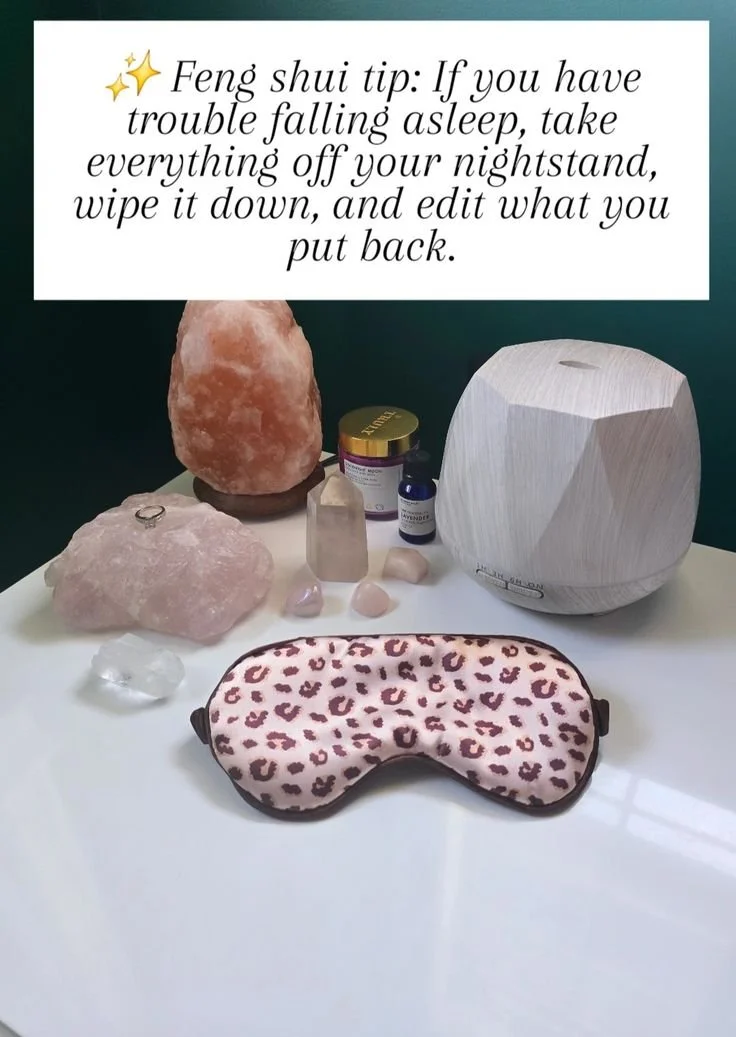
4. Keep Clutter Under Control
This is probably the most important tip.
A cluttered bedroom can make it harder to relax, particularly when unfinished tasks and piles of laundry are constantly in view.
This does not mean your bedroom needs to look like a hotel room every day. Real homes are lived in, and there is nothing wrong with that. However, creating a little order before bed can help the room feel more restful.
Start with the most visible areas: the bedside tables, the floor around the bed and the top of your dresser.
Put away clothes, return books to their shelves and move anything that belongs elsewhere back to its proper place.
If you use the space beneath your bed for storage, choose containers that fit neatly and keep the area clean. There is no need to remove everything simply because of a Feng Shui rule, but avoid allowing it to become a place where forgotten belongings accumulate. Try and only keep things like towels and blankets stored under the bed.
I find it helpful to think of the bedroom as a space for rest rather than a second office, laundry room or storage cupboard. Try and keep workout equipment and work related items out of the bedroom.
Try a five-minute bedroom reset each evening:
Put away clothes and shoes.
Clear the bedside tables.
Remove cups, dishes and anything that belongs in another room.
Straighten the bedding.
Dim the lights and prepare the room for the night ahead.
These small habits can make a surprising difference to how the room feels when you return to it. The key is consistency.
5. Use Soft, Restful Colours
Color is a lovely way to influence the atmosphere of a bedroom.
For a calm and timeless look, consider warm whites, soft creams, muted greens, dusty pinks, gentle taupes or earthy neutrals. These shades work particularly well with natural materials such as wood, linen, wool and cotton.
In Feng Shui, colors are often interpreted through the five-element system and their symbolic associations. You can explore those traditions when choosing your palette, but remember that there is no single color scheme proven to produce deeper sleep for everyone but, just as a general rule don’t sleep on colors that are too loud and fiery, for example red sheets.
The most important consideration is whether the room feels comfortable and restful to you.
If you love color, you do not have to remove it. A muted floral wallpaper, a soft pink throw or a pair of sage-green cushions can bring personality into the room without making it feel visually overwhelming.
I would begin with a simple foundation and add character through bedding, curtains, artwork and a few carefully chosen accessories.
6. Layer Your Bedding for Comfort
Beautiful bedding is one of the simplest ways to make a bedroom feel more luxurious.
However, the best bedding is not just about appearance. Your mattress, pillows, sheets and duvet should help you remain comfortable throughout the night.
Choose a mattress and pillow that provide suitable support for your sleeping position. Select breathable bedding and adjust the thickness of your duvet to the season. If you tend to feel hot during the night, lighter layers may be more comfortable than a heavy duvet.
Natural fibers such as cotton and linen are popular choices because they feel pleasant against the skin and can be suitable for a range of temperatures, depending on the weave and construction.
For a beautifully layered bed, try:
A comfortable fitted sheet.
A breathable top sheet, if you like using one.
A duvet suited to the season.
A few pillows that provide the support you need.
A lightweight blanket or throw that can be removed easily.
You can make the bed look inviting without adding so many decorative cushions that you have nowhere to put them at bedtime.
Wash your bedding regularly and keep pillows and mattresses in good condition. If your mattress is uncomfortable or your pillow no longer supports your neck properly, changing the arrangement of the room alone is unlikely to solve the problem.
7. Make Your Lighting Softer in the Evening
Lighting has a significant role in how we prepare for sleep.
Bright lighting is useful during the day, but a bedroom filled with strong overhead light late in the evening can make it harder to wind down. Our bodies use light as a cue for the sleep-wake cycle, so reducing bright light in the hours before bedtime can be helpful.
I would use a combination of ambient lighting and bedside lamps rather than relying entirely on a bright ceiling light.
Warm-toned bulbs, fabric lampshades and dimmable lighting can create a softer atmosphere. If you enjoy reading in bed, choose a lamp that provides enough light to read comfortably without illuminating the entire room.
Try to keep overhead lighting dimmer in the evening and avoid bright screens close to bedtime where possible.
Candles can create a lovely atmosphere, but i tend to advise candles be left out of the bedroom. In Feng Shui, balancing the five elements (water, fire, earth, wood, and metal) is important but the less fire in the bedroom, the better.
If you sleep with a lot of fire element in your bedroom, pay attention to the quality of sleep and how you feel when you wake up. Too much fire can add to feelings of anxiety, anger, and frustration.
8. Mirrors
Mirrors are often discussed in bedroom Feng Shui, particularly when they face the bed. This is one of my most asked questions.
As a general Feng Shui rule, mirrors should not face you while you are sleeping. Mirrors can invite unwanted energy and cause restless sleep.
If you have a mirror in your bedroom, i would suggest placing it inside a closet, or on a wall that won’t reflect you as you are sleeping.
If moving the mirror isn’t an option, try and cover it with a sheet if you can, and see if that helps.
9. Bring Nature Into Your Bedroom
Natural materials can make a bedroom feel warmer and more connected to the outdoors. I love how grounded a room feels with earth and wood elements.
Wooden furniture, linen curtains, wool throws, cotton bedding and a small arrangement of seasonal branches can all bring texture and character into the room.
Plants are another popular choice. If you enjoy keeping houseplants, choose varieties that suit your light levels and keep them healthy. Avoid overwatering them, and remove any dead leaves or moldy plant material promptly.
In Feng Shui, plants are often associated with the wood element, growth and vitality. You can incorporate this symbolism if it resonates with you.
From a practical standpoint, you do not need plants in your bedroom to sleep well. If you have allergies, limited light or concerns about damp soil, a simple vase of flowers or natural materials may be a better choice.
I particularly like the idea of bringing a little of the garden indoors, whether through a small plant, a wooden bedside table or fresh flowers in season.
10. Keep the Bedroom Cool, Dark and Quiet
This is one of the most practical steps you can take when creating a bedroom for better sleep.
A room that is too warm, bright or noisy can interfere with sleep, regardless of how beautifully it is decorated.
Consider these adjustments:
Temperature: Keep the room comfortably cool and adjust your bedding to avoid overheating.
Darkness: Use well-fitting curtains or blinds to reduce unwanted outdoor light.
Noise: Address avoidable noise where possible. Earplugs or a suitable sound machine may help some people.
Air quality: Ventilate the room when appropriate and address sources of smoke, dampness or strong irritating fragrances.
Electronics: Keep televisions and other distracting devices out of the bedroom if they interfere with your wind-down routine.
There is no need to spend a fortune on special sleep products. Start with the conditions that are most likely to be affecting your comfort.
A Simple Feng Shui Bedroom Checklist
If you want to begin making changes, use this checklist to work through your bedroom gradually.
Position the bed against a solid wall where practical.
Make sure the bed is comfortable and provides appropriate support.
Keep a clear path around the bed and to the door.
Create balanced bedside surfaces where space allows.
Put away unnecessary clutter.
Choose colours and materials that make the room feel restful.
Use soft lighting in the evening.
Position mirrors where they are useful and do not cause unwanted distractions.
Add natural textures or a healthy plant if suitable.
Reduce unwanted light, noise and excessive warmth.
Keep work and electronic distractions to a minimum.
Establish a simple evening wind-down routine.
You do not have to complete every item in one day. Begin with the changes that would make the greatest difference to your comfort.
If you would like more Feng Shui articles let me know! I would be happy to help support you by creating more guides, i do have another guide that will give you 7 Feng Shui tips for abundance, that you can read here.